


Mission Before Metal: Choosing the Right Private Jet by Letting the Aircraft Follow the Mission
Private aviation is often presented as a choice between aircraft categories: light jet, midsize, super-midsize or heavy jet.
But in my experience, that is not where the decision should start.
The right private jet is not necessarily the biggest, newest or most luxurious aircraft available.
It is the aircraft that best matches your mission, your schedule and the way you actually travel.
As a private aviation advisor and former pilot, this is one of the most important distinctions I try to bring to every charter conversation at My Private Jet Guy.

Start With the Mission, Not the Jet
Before looking at aircraft, I want to understand the trip.
How many passengers?
Where are you going?
How far?
How much luggage or equipment are you carrying?
Are you flying nonstop?
Do you need a specific departure time?
Are there multiple destinations?
And perhaps most importantly:
What are you trying to accomplish by flying private?
A two-hour executive trip with four passengers has very different requirements from a family traveling internationally with six large pieces of luggage.
Choosing an aircraft first and trying to make the mission fit afterward is one of the easiest ways to overpay.
The Aircraft Categories Are Tools, Not Status Symbols
Very Light and Light Jets can be extremely efficient for shorter missions and smaller groups. Their ability to use smaller airports can also save valuable time.
Midsize jets offer a useful balance of cabin comfort, range and capacity and are often an excellent choice for longer domestic missions.
Super-midsize jets can provide significantly more cabin and baggage capacity while handling transcontinental missions with greater flexibility.
Heavy and long-range aircraft become relevant when range, passenger capacity, cabin space and international capability are the priorities.
But there is no universal “best” category.
There is only the best aircraft for a particular mission.

Range Is More Than a Number
One of the common mistakes I see is looking at an aircraft’s published range and assuming that means it can perform every trip at that distance.
Real-world operations are more complicated.
Weather, routing, payload, passenger count, fuel requirements, airport conditions and operational considerations can all affect what an aircraft can realistically accomplish.
The objective should not simply be:
“Can this aircraft fly that far?”
The better question is:
“Can this aircraft reliably perform this mission the way I need it to?”
That difference matters.
Passenger Count Doesn’t Tell the Whole Story
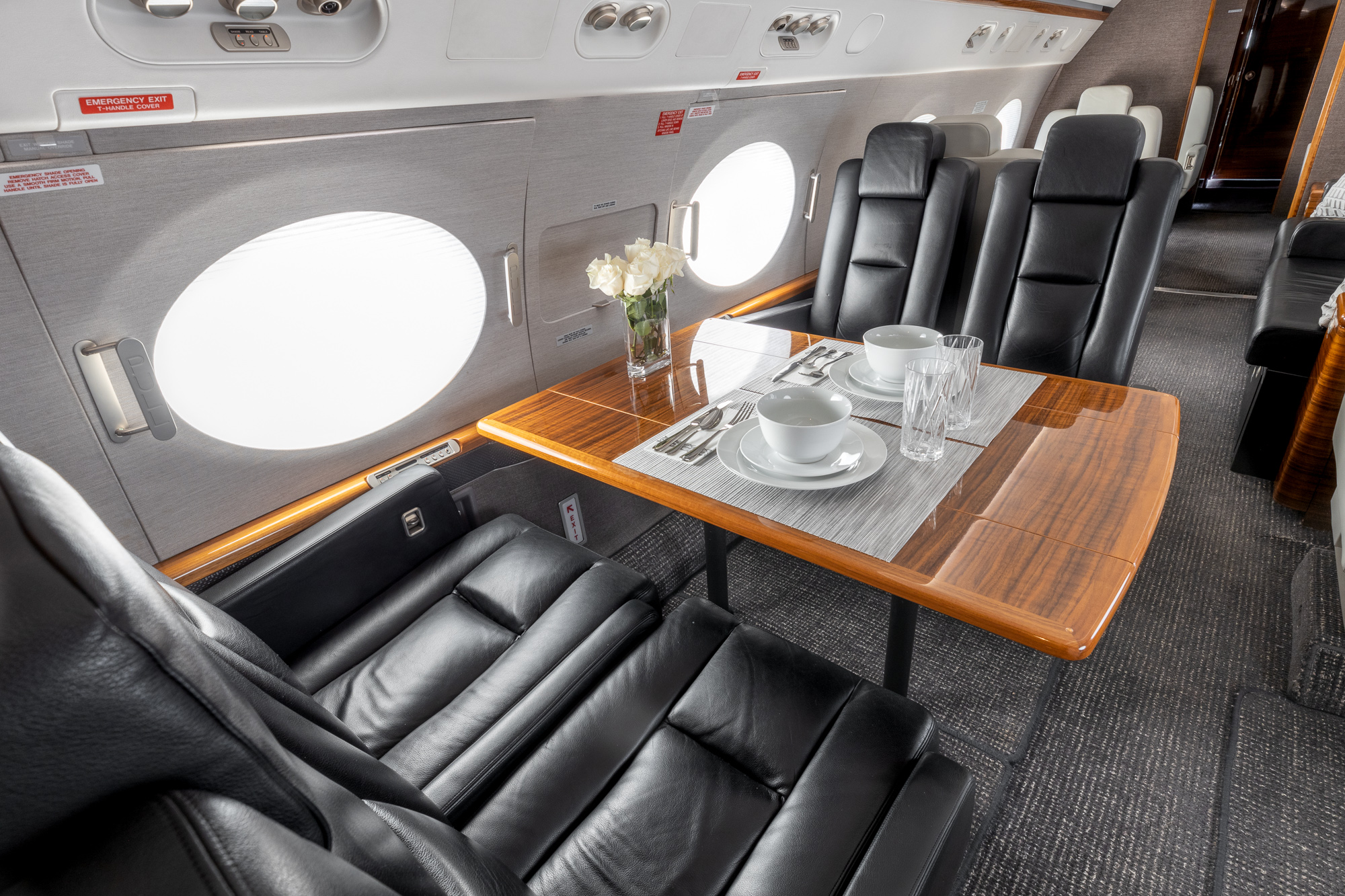
Ten seats on paper does not necessarily mean ten people will be equally comfortable.
Cabin configuration, seat layout, cabin height, lavatory arrangements, baggage capacity and the duration of the flight all matter.
For a short flight, you may be perfectly comfortable in a smaller aircraft.
For a six- or seven-hour flight, the equation changes.
If you’re using the aircraft as a mobile office, connectivity, workspace and cabin environment may be more important than simply counting seats.
This is particularly relevant for executives and family offices.
The aircraft should support what happens during the flight — not simply transport you to the destination.
Don’t Forget the Luggage
This is one of the most overlooked parts of aircraft selection.
Golf clubs, skis, surfboards, trade-show equipment, family luggage, business materials or specialized equipment can quickly change which aircraft makes sense.
I’ve seen trips where the passenger count suggested one aircraft category, but the baggage requirements pointed toward another.
The aircraft needs to carry the people and everything they actually need to bring with them.
The Cheapest Aircraft Is Not Always the Best Value
Private aviation pricing is about much more than the hourly rate.
A smaller aircraft may have a lower hourly cost, but if it requires a fuel stop, doesn’t accommodate your luggage, can’t operate from the preferred airport or creates scheduling limitations, the apparent saving can disappear very quickly.
The same applies to choosing a larger aircraft simply because it is available.
You shouldn’t pay for capability you don’t need.
Value comes from matching capability to requirement.
The Operator Matters as Much as the Aircraft
Two aircraft of the same model can represent very different charter experiences.
The operator, aircraft age and condition, maintenance culture, crew experience, operational standards and location of the aircraft all matter.
This is where private aviation becomes much more than finding a plane and quoting a price.
A professional advisor should be looking beyond the aircraft type and asking:
-
Who operates it?
-
Where is the aircraft based?
-
How is it maintained?
-
Who are the pilots?
-
Is the aircraft appropriately positioned for the trip?
-
What happens if the aircraft becomes unavailable?
-
Are there operational limitations that affect the mission?
The aircraft is only one part of the solution.

This Is Where an Advisor Adds Value
A booking platform can show you aircraft.
An experienced aviation advisor should help you determine which aircraft you actually need.
My role at My Private Jet Guy is not simply to find a jet and send you a price.
It is to understand the mission, evaluate the available solutions and help you make an informed decision.
Sometimes the answer is a light jet.
Sometimes it is a super-midsize.
Sometimes it is a large-cabin aircraft.
And sometimes, after looking at the numbers and the mission objectively, private charter may not be the right solution at all.
That is part of being an advisor.
Private Aviation Should Give You Control
The real benefit of private aviation isn’t simply luxury.
It is control.
Control over when you leave.
Control over where you depart.
Control over your itinerary.
Control over your time.
And ultimately, control over how efficiently you move.
That is why aircraft selection matters.
The right jet doesn’t just make the flight more comfortable.
It makes the entire mission work better.
The My Private Jet Guy Approach
At My Private Jet Guy, I believe every private flight should begin with a simple question:
What are you trying to accomplish?
Once I understand that, we can determine the aircraft, operator, and charter solution that makes the most sense.
Because in private aviation, the best aircraft isn’t the one with the most features.
It’s the one that gives you exactly what your mission requires, without paying for what you don’t need.
Frequently Asked Questions
What is the best way to determine my mission profile?
Understanding your mission profile involves assessing the number of passengers, luggage, travel distance, and priorities like speed or comfort. Clarifying these needs ensures you choose the right aircraft for your trip.
How do runway requirements affect jet choice?
Runway length and environmental conditions at airports determine which jets can land there. Smaller runways may limit options, while altitude and temperature can impact performance. Ensure your jet matches these requirements for safe travel.
Why should I consider operator safety standards?
Operator safety standards ensure that the aircraft is maintained and operated under stringent protocols. Certifications like ARGUS Gold indicate a commitment to safety, providing peace of mind for your journey.

